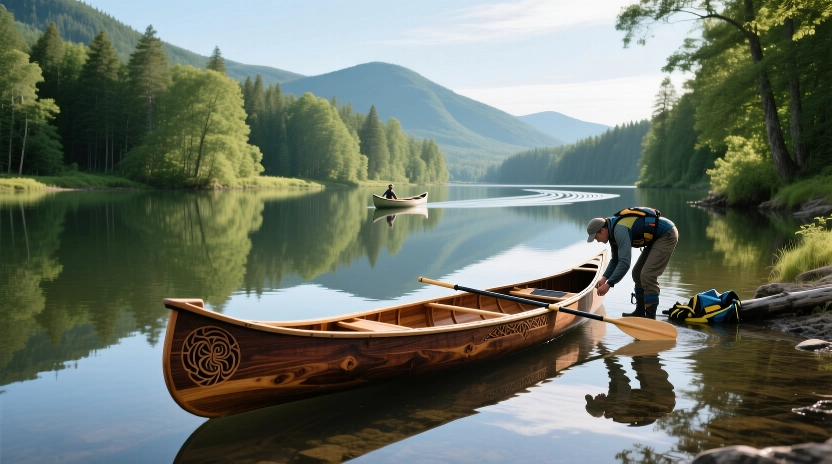
The rhythmic chant of paddlers echoes across the water — 'All together, all together, lean on the paddles' — a powerful invocation of unity, discipline, and readiness for battle. This traditional war canoe call is more than a song; it is a tactical directive, a spiritual preparation, and a historical testament to the coordinated warfare practiced by indigenous seafaring cultures. War canoes were not merely vessels; they were instruments of power, stealth, and survival, designed to glide silently through enemy waters or charge with overwhelming force when the moment demanded.
Recent anthropological studies and cultural revivals have brought renewed attention to the significance of war canoes in Pacific Islander, Māori, and Indigenous North American societies. In 2023, a major exhibition at the Te Papa Tongarewa Museum in New Zealand highlighted reconstructed Māori waka taua (war canoes), complete with oral histories detailing synchronized paddling techniques and battle chants nearly identical to the verses described here. These chants served dual purposes: maintaining stroke precision and instilling courage before engagement.
The lines 'War canoe can creep along, can glide along when there may be enemy near' reflect a strategy of stealth and surveillance. Historical accounts from Hawaiian and Fijian traditions describe how war parties would approach rival islands under cover of night, relying on silent paddling to avoid detection. The command 'lean on and lift out silently' ensured minimal splash, allowing warriors to remain undetected until within striking distance.
Conversely, the shift to 'lean on and lift out rapidly' signals an explosive transition to attack mode. As the verse declares, 'War canoe come flashing towards us, crashing towards us now we see the enemy clear,' this reflects the psychological warfare employed — sudden appearance, loud chants, and aggressive movement designed to intimidate. The repeated call 'Fight to kill the fight to kill the enemy' underscores the high stakes of inter-tribal conflict, where victory meant survival and defeat could lead to enslavement or annihilation.
Modern interpretations of these traditions are being preserved through cultural festivals and competitive war canoe racing. In British Columbia, the annual Tribal Canoe Journey brings together dozens of First Nations in a revival of ancestral maritime practices. Teams train for months, synchronizing their strokes to chants passed down through generations. These events emphasize peace and unity today, but the underlying discipline and strength recall their martial origins.
The closing lines — 'And bring the war canoe safe home again' — carry deep emotional weight. They speak not only of physical return but of communal resilience, honoring those lost and celebrating collective endurance. Ethnomusicologists note that the humming ('mmmm') at the end mimics the sound of water against the hull, symbolizing continuity and the eternal rhythm of the sea.
Today, educators and cultural leaders use these chants in language revitalization programs, ensuring that younger generations understand both the literal and symbolic meanings embedded in each phrase. The war canoe, once a vessel of conquest, has become a symbol of identity, resistance, and cultural pride. Its legacy lives on not in battle, but in the steady beat of paddles moving as one — all together.